ENG
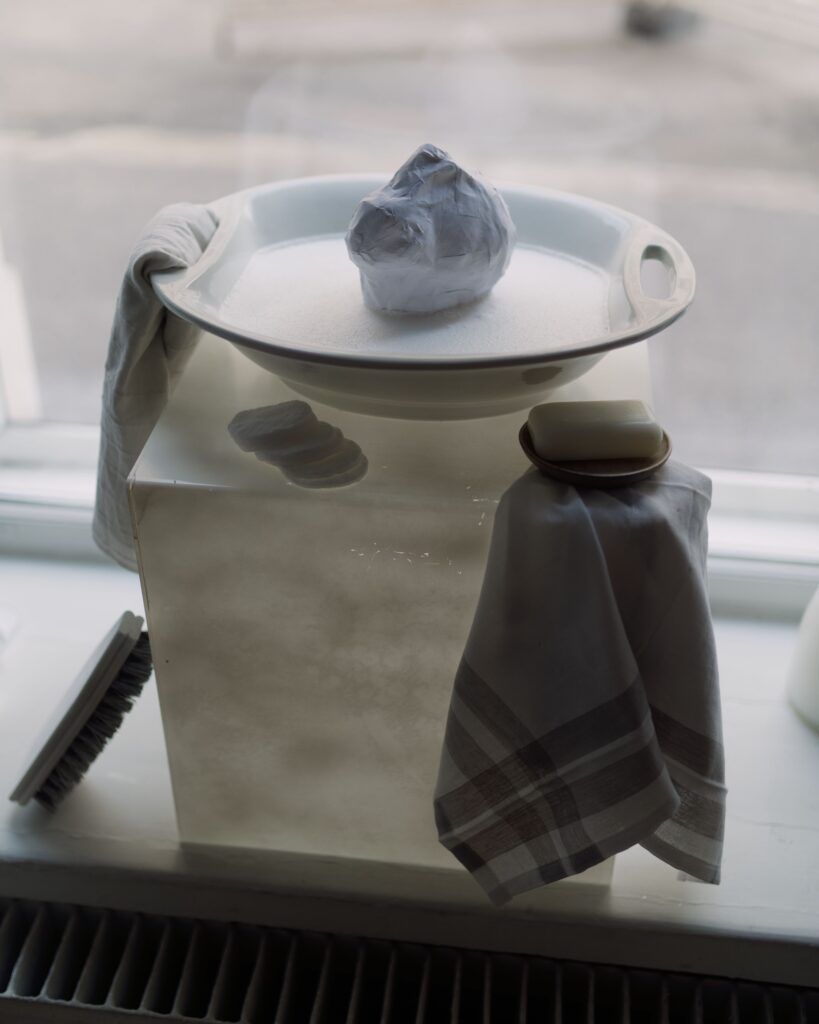
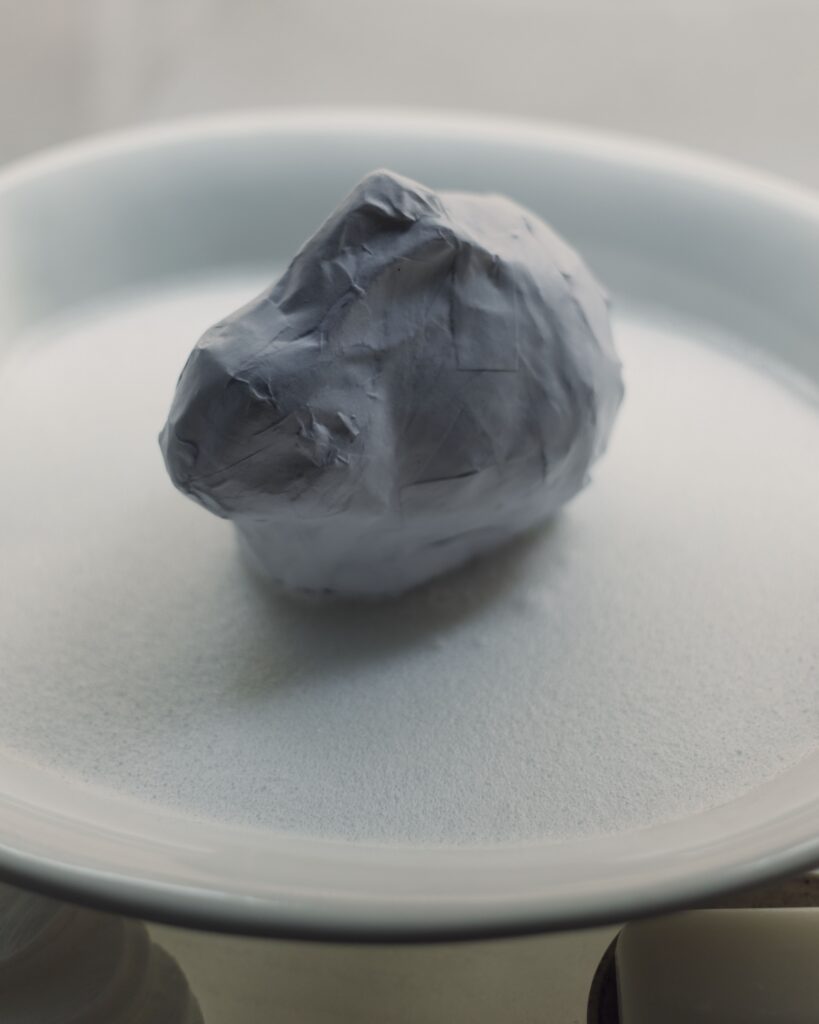
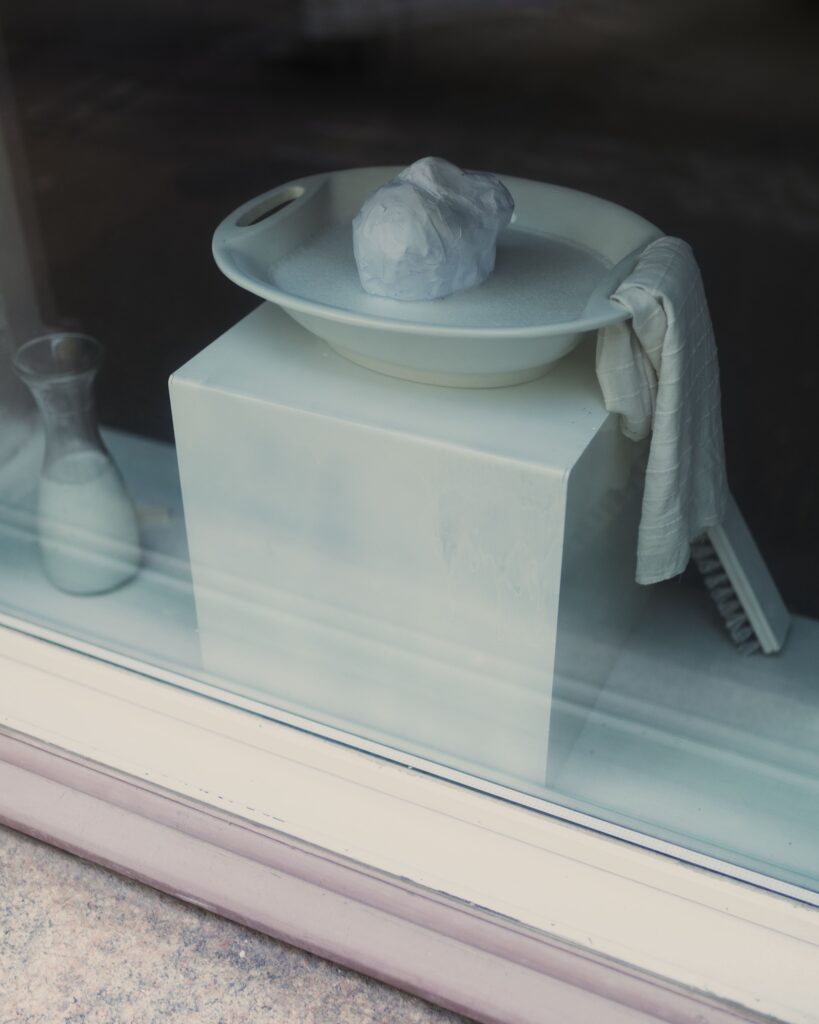
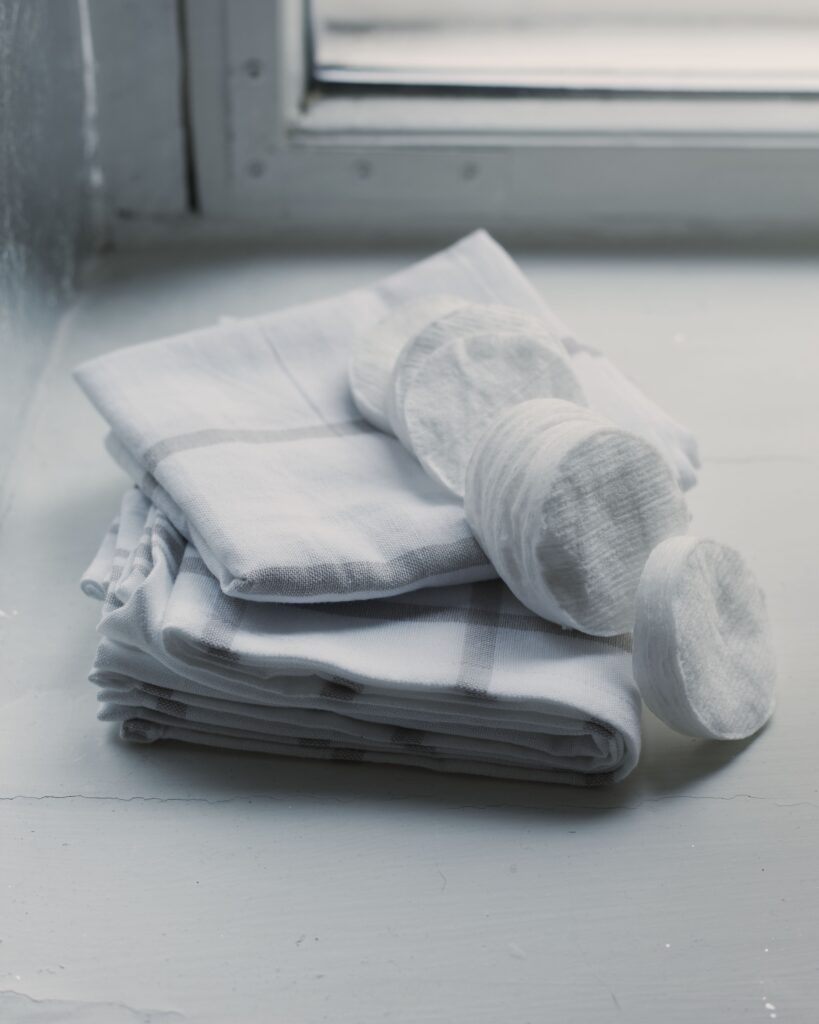
Installation Just a moment and one day at a time—that’s where I always find comfort (2026) stages a ritual of care that gradually, through its own actions, begins to turn against itself. A papier-mâché hare is placed within a makeshift washing setup consisting of water, soap, a brush, and various cleaning cloths. The scene resembles an ordinary act of maintenance: something fragile being cleaned, tended to, or restored. Yet the material logic of the situation introduces a contradiction. The hare is made from paper—a surface that cannot withstand water in excessive amounts. The very gesture meant to preserve it simultaneously carries the potential to dissolve and destroy it.
The composition draws from familiar domestic gestures of cleaning and upkeep, actions often associated with care, patience, and responsibility. At the same time, these gestures contain an underlying tension. Washing, scrubbing, and maintaining are repetitive acts that promise repair, yet they do not always prevent deterioration. In this setting, the tools of care become ambiguous: they could protect the object, but they could just as easily contribute to its disintegration and destroyal.
The hare itself carries layered symbolic associations. Across folklore and art history it often appears as a vulnerable prey animal—alert, exposed, and fragile—while also being linked to cycles of transformation, subconscious mind, disappearance, and return. Within the installation, the hare becomes a stand-in for something living and attentive yet difficult to hold onto, a body that exists in a state of precarity.
Within the framework of the exhibition’s theme of rollback, the work reflects on moments when effort no longer produces progress. Instead of repair, the process reveals fragility. Instead of moving forward, the gesture repeats itself. The installation inhabits the tension between care and exhaustion, between the impulse to sustain something and the recognition that some things cannot ultimately be stabilized through care alone.
The scene functions as a metaphor for stalled processes—both personal and creative—where attempts to maintain or restore begin to expose the limits of control. What initially appears as a nurturing gesture gradually transforms into an image of vulnerability, repetition, and the slow breakdown of certainty.
The work also draws from lived experiences of caregiving—from supporting family members to witnessing the slow erosion of memory—revealing the vulnerability, repetition, and often invisible labour involved in sustaining others.
Artwork is made in collaboration with visual artist and graphic designer Pauliina Tervonen.